
Outdoor enclosures for battery storage & BESS
Battery, community and commercial storage systems operate outdoors — and their cells are sensitive to temperature. Ventilation, heat exchangers or climate control keep them within their temperature window; aluminium, IP 54/55 and IK10 protect against moisture, dust and vandalism. Fire-protection and EMC versions on request.
Configure an outdoor enclosure → Request a quoteEnclosure technology for battery storage
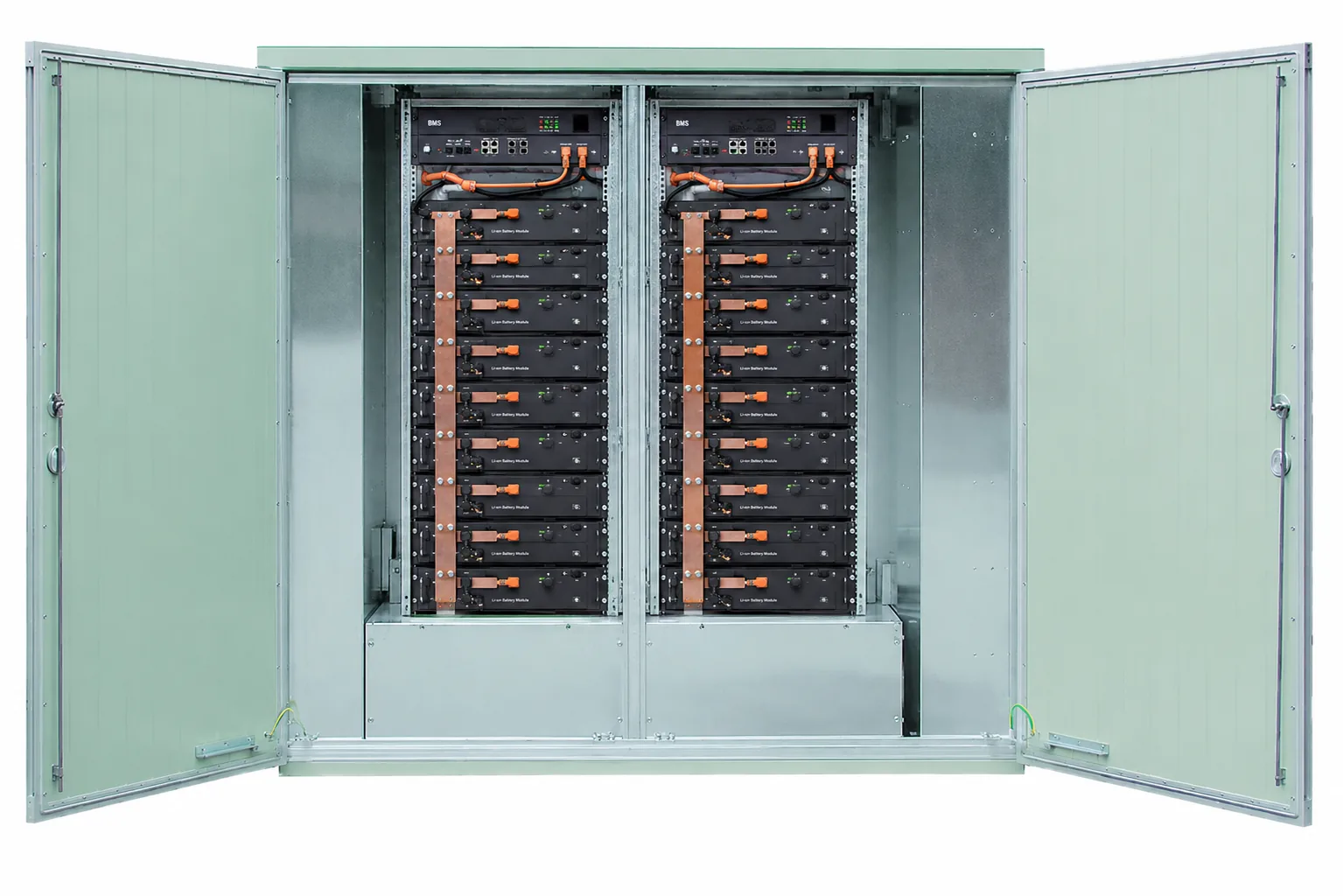
Whether a grid-connected large-scale storage system, community storage in a residential area or commercial storage behind the meter: battery modules, BMS and power electronics are increasingly located outdoors — and place far higher demands on their housing than a simple weather protection box. The decisive factor is thermal management: lithium cells only retain their service life and safety within a narrow window. The enclosure must dissipate the heat load from charge and discharge cycles, protect against frost in winter and passively buffer solar radiation — while also protecting against moisture (IP 54/55), dust and vandalism (IK10).
For this, ZPAS supplies the SZD aluminium series — lightweight, corrosion-resistant and dimensionally stable, double-walled for passive thermal insulation and with integrable ventilation, heat exchanger, heat pump or cooling unit. The battery cells, the BMS and the inverters come from your system integrator; we build the matching housing for them, fitted out and ready for operation — with prepared cable entries, sensor feed-throughs and mounting levels. Because every storage project scales differently, the enclosures are built per project: from the series for a roll-out to a one-off special construction, straight from our own production.
Typical outdoor storage applications
Grid-connected BESS
Outdoor enclosures for battery storage on the public grid — frequency containment, balancing power and grid support.
Community storage
Storage enclosures for residential neighbourhoods and tenant electricity schemes — compact, quiet and visually unobtrusive outdoors.
Commercial & industrial storage
Behind-the-meter storage for peak shaving and self-consumption optimisation on site.
PV coupling
Enclosures for the combination of photovoltaics and battery storage — buffering solar power on site.
Charging park buffer storage
Buffer storage relieves the grid connection of HPC charging parks and smooths load peaks during fast charging.
UPS & emergency power
Enclosures for battery-backed UPS and emergency power supplies for critical infrastructure outdoors.
Requirements for storage enclosures — clearly set out
Battery storage systems come with specific requirements. We implement them per project and state openly what is standard on the enclosure side and what is agreed per order:
Thermal management
Cells have a narrow temperature window. Passive/active ventilation, air/air heat exchangers, a heat pump or a cooling unit maintain the temperature; the double-walled SZD version buffers solar radiation passively.
Fire-protection version
Fire-protection-oriented version in non-combustible sheet steel for increased safety requirements of energy storage systems — on request, designed per project (no classified fire resistance F/EI).
EMC shielding
Chromated, conductive aluminium surface for a shielded construction — relevant for installations close to power electronics on the public grid. On request.
Protection & vandalism
IP 54 (IP 55 on request) according to EN 60529, impact resistance IK10 (20 joules) according to EN 62262 — for permanent outdoor installation.
Key technical data
Outdoor battery storage: temperature determines service life
In no other application does cost-effectiveness depend as directly on the enclosure as in battery storage. Lithium cells age depending on temperature: a permanently too warm installation costs a noticeable number of cycles and capacity, and cells that are too cold must not be charged, or only at a reduced rate. The enclosure is therefore part of the storage concept — it must keep the modules within their comfort window all year round, cool them against the solar load in summer and keep them warm in winter.
The double-walled SZD version handles the base load passively: the ventilated cavity between the walls dissipates solar heat before it reaches the modules. Ventilation, a cooling unit or a heat pump provide active support — sized according to the number of modules, charge rate and site. Just as important is the airflow in the cabinet: racks and modules need a defined cold air supply, and the battery management system (BMS) needs clean, separately routed measurement and communication lines.
Also relevant for planning and approval: access protection against unauthorised persons (multi-point locking, IK10), installation on a plinth or foundation with cable entry from below, warning signs and — depending on the project and operator specifications — fire-protection and EMC versions, which ZPAS implements on request on a project basis. Community and commercial storage systems also often grow in stages: the bayable enclosure system allows extension with further cabinets without touching the existing installation.
Separating the battery room from the technical room (inverters, control) has proven itself in practice — two climate zones in one installation. The cooling & heating capacity calculator shows how much cooling or heating capacity your storage system needs; the ZPAS technical team takes care of sizing and special dimensions.
For community and commercial storage, appearance increasingly matters too: the enclosures stand visibly in residential surroundings or on company premises. ZPAS supplies the powder coating in any RAL colour — to match the surroundings, the requirements of the local authority or the operator’s corporate design.
Why ZPAS for battery storage
ZPAS is a European manufacturer of enclosure and cabinet systems with over 50 years of experience and its own design department (80+ engineers). For battery storage, this means: any special size, series or one-off, with prepared equipment — thermal management (heat exchanger, heat pump, cooling unit), cable entries, sensor feed-throughs and mounting levels for battery modules, BMS and power electronics. We supply fire-protection and EMC versions on request, ready for operation ex works. You can put together your specific design — dimensions, degree of protection, climate control and accessories — in a few minutes in the outdoor enclosure configurator.
Planning checklist: battery storage enclosures
These points belong in every BESS project before the enclosure is ordered:
- Heat balance: number of modules, charge rate and inverter power loss determine the cooling; add the solar load of the site.
- Climate zones: control the temperature of the battery room and the technical room separately — the cells will reward you with a longer service life.
- BMS wiring: route measurement and communication lines separately from the power wiring; provide mounting levels for them.
- Fire protection & EMC: clarify operator and insurer requirements early — ZPAS implements both versions on a project basis.
- Installation: plinth or foundation with cable entry from below; observe clearances and access routes for service and the fire brigade.
- Security: access protection (IK10, multi-point locking) and standard-compliant warning signs on the enclosure.
- Scaling: choose a bayable system if the storage is to grow in expansion stages.
With the heat balance and the specification, ZPAS designs the complete enclosure — wall construction, climate control, interior fit-out — and delivers ex works, from a single enclosure to a series for community storage programmes.
Frequently asked questions — outdoor enclosures for battery storage
How is the temperature of the battery cells controlled in the enclosure?
Cells need a narrow temperature window for service life and safety. We integrate active thermal management — a cooling unit or air/air heat exchanger for cooling, a PTC heater against frost — and use the double-walled construction to passively buffer the outside temperature. We size the cooling and heating capacity according to the charge/discharge profile and the site; the cooling & heating capacity calculator works out the right sizing.
Is there a fire-protection version for energy storage systems?
Yes — for increased safety requirements, we supply a fire-protection-oriented version in non-combustible sheet steel. This does not come with classified fire resistance (F30/60/90 or EI) — only tested fire protection components provide that. Since the fire protection concept of a BESS depends on the cell system and the plant design, and cell certification lies with the storage manufacturer, we implement your specifications on the enclosure side — pressure relief, venting paths and interfaces for fire detection, on a project basis according to your safety concept.
Are the enclosures EMC-shielded?
For applications close to power electronics — such as installations on the public grid — we offer an EMC version with chromated, conductive aluminium surfaces and suitable shielding and earthing concepts. The specific design is carried out on request, on a project basis.
Which sizes and special dimensions are available?
Dimensions, module grid and equipment are freely configurable — from one-off production to series, any special size, any RAL colour. The enclosures of the SZD series are bayable, so larger, modular storage installations can also be realised. Foundation, wall or pole mounting is possible.
Can the enclosure be divided into a battery section and a technical section?
Yes — this is in fact the recommended design: battery modules and power electronics (inverters, control) get separate areas, each with its own temperature control. This keeps the cells in their optimum temperature window, while the electronics dissipate their waste heat independently.
Outdoor enclosures for your storage project?
Whether community storage, commercial storage or grid-connected large-scale storage — tell us the storage size, degree of protection and temperature requirements, and we will get back to you with a specific recommendation.