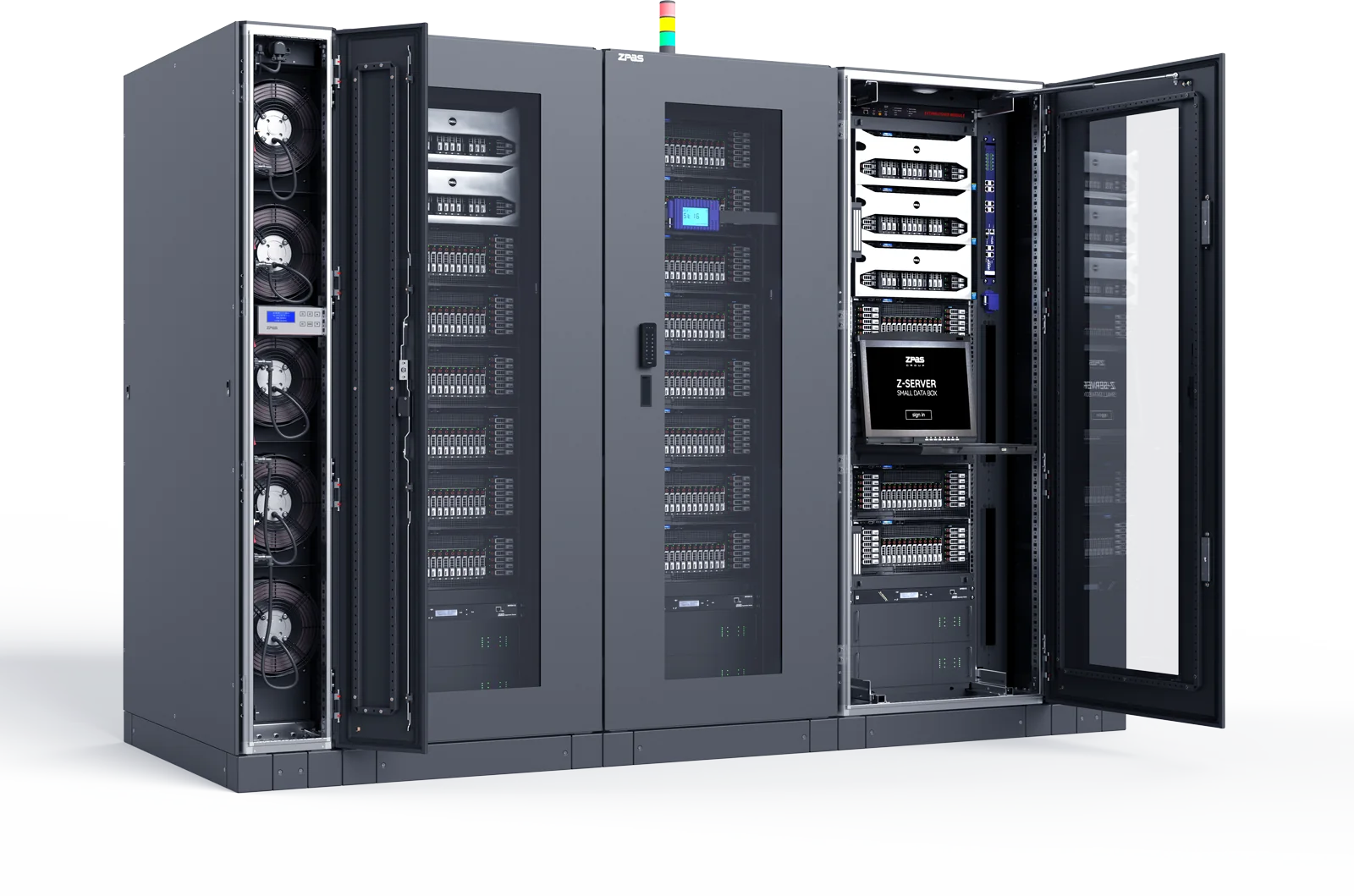
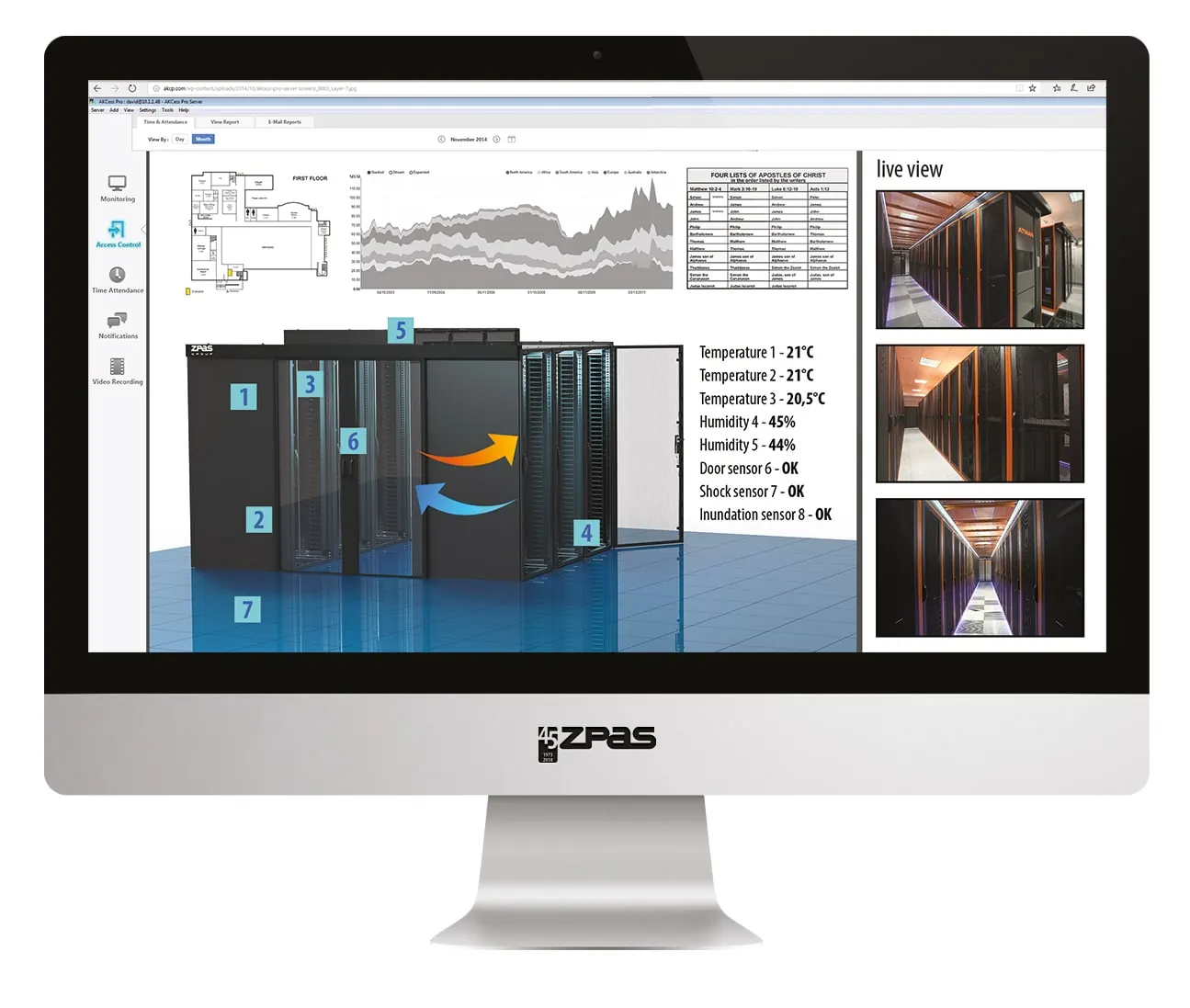
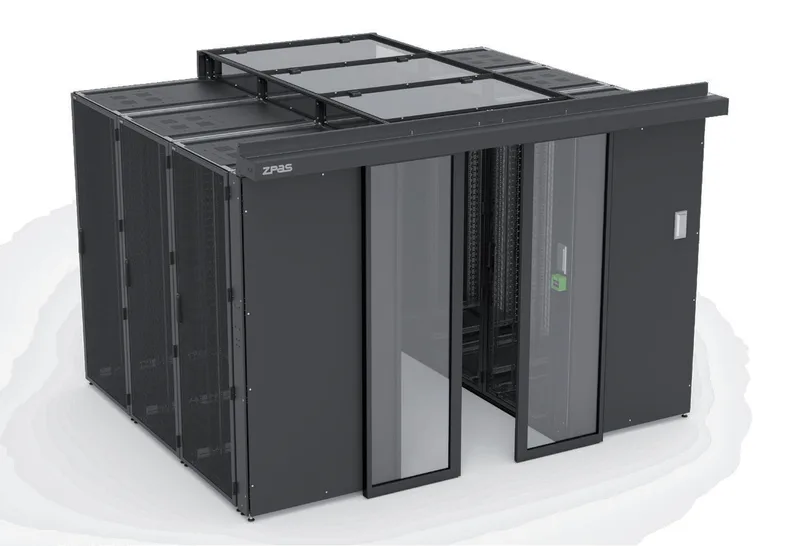
A micro data centre (also micro data center or edge data centre) is a single 19″ cabinet that combines the functions of a small data centre: IT space, climate control, power supply with UPS installation space, access control, monitoring and an enclosure made of non-combustible sheet steel. It stands where the application is — and does not need a server room of its own.
What is a micro data centre?
Between the single server rack and the modular data centre there is a gap that affects many projects: more than “a few servers in a rack”, but less than a dedicated room. That is exactly where the micro data centre sits. The difference from an ordinary server rack lies not in the sheet steel but in the range of functions: a server rack provides space and load capacity — a micro data centre also brings the infrastructure that the server room would otherwise supply.
Three sizes can be clearly distinguished:
- Single cabinet — 19″ rack for IT equipment; cooling and power come from the room. The designs are shown in the overview 19″ server racks & network cabinets.
- Micro data centre — one to a few racks as a closed, self-sufficient unit with its own climate control, UPS space, access control and monitoring. Installed in the working area, no server room required.
- Container or modular data centre — a dedicated shell with aisle containment, redundant cooling and several rows of racks. Details on the page Container data centre & edge data centre.
In practice, the boundary is drawn by the question of who creates the ambient conditions. As soon as the cabinet controls and documents temperature, power supply and access itself, it is a micro data centre — regardless of whether it stands in a factory hall, a storeroom or a technical corridor.
The building blocks — what is inside the cabinet
ZPAS builds the micro data centre from series components, assembled and wired at the factory. This keeps every part documented, replaceable and expandable later on:
Z-SERVER as the base
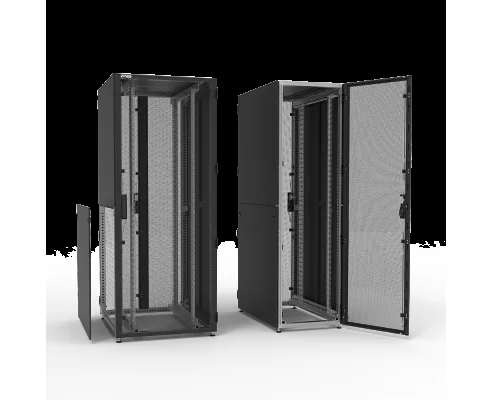
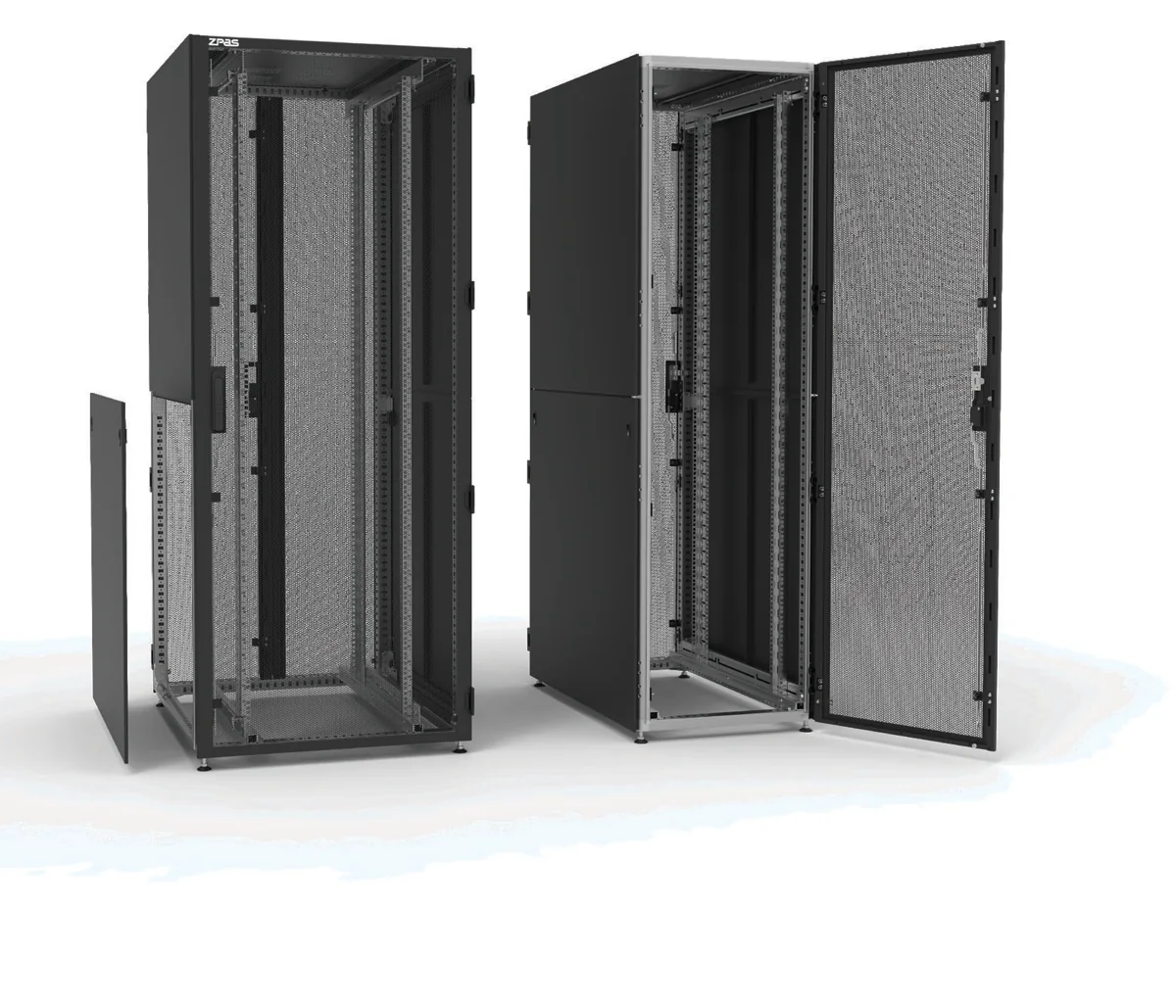
42, 45 or 47 U, depth 1000 or 1200 mm, load capacity 1,600 kg on levelling feet (2,000 kg without). Perforated doors with 86 % air permeability for front-to-back cooling — or closed up to IP 54 when a compressor cooling unit is in operation. Enclosure made of non-combustible sheet steel.
Z-SERVER in detail →Climate control according to heat load
LV filter fans with GV exhaust filter for small loads, CVE cooling unit as a side-mounted unit or ETE as a roof-mounted unit for the closed cabinet, CNW air-to-water heat exchanger where chilled water is available. The HGE heater adds protection against condensation and frost.
Climate control in detail →Power supply & UPS installation space
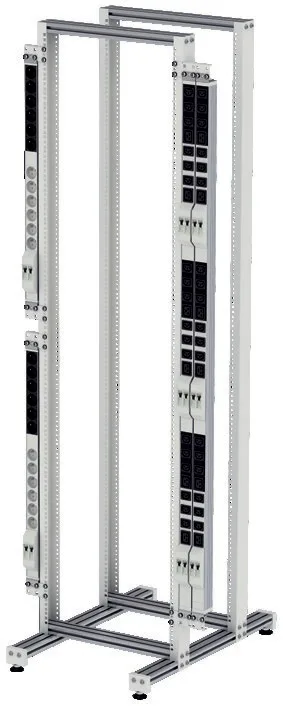
Rack units and load capacity for the UPS and battery blocks are planned in from the start — at the bottom of the cabinet, where the weight belongs. In addition: PDU strips (16/32 A, optionally managed), cable routes and continuous equipotential bonding with earthing studs.
UPS & battery cabinets →Access control & monitoring
Because a micro data centre usually stands unattended in the working area, a door contact and sensors for temperature, humidity and power are part of it. For this, ZPAS integrates AKCP technology at the factory, including logged access and alerts by email or SMS.
Cable management & trays
Vertical and horizontal cable routing, brush strips in the floor plate, blanking panels for airflow management and equipment shelves from 6 to 200 kg. The routing outside the cabinet can be designed to EN 61537 with the cable tray configurator.
19″ accessories →Containment from the second rack
If the site grows beyond one rack, the single cell becomes a small row with cold aisle/hot aisle separation: Databox with roof modules and sliding doors, manual or electric — on the same Z-SERVER base, without changing systems.
Databox containment →Catalogue for reference: IT solutions (PDF) — Z-SERVER, accessories and containment with catalogue numbers.
Cooling and sizing — the practical part
Cooling decides whether a micro data centre works at its location. Rule of thumb: the connected IT load in kW roughly corresponds to the heat load to be dissipated. Up to about 1.5 kW per cabinet, filter fans are often sufficient in air-conditioned indoor rooms; above that, and in dusty or warm environments, the closed cabinet with cooling unit is the clean solution — the internal air then stays in circulation, and dust, humidity and hall heat stay outside. With several kilowatts and an existing chilled water network, the CNW air-to-water heat exchanger is usually the most efficient option.
How much cooling capacity your set-up actually needs — including ambient temperature, cabinet size and installation situation — is calculated in two minutes by the cooling capacity calculator (free of charge), which also names the right unit size.
Typical applications
Edge in production
Control and analytics IT right next to the line — short latency, protected from dust and hall heat.
Branches & sites
One rack per site, built and documented identically everywhere — easy to roll out and monitor remotely.
Remote site without a server room
Where there is no technical room and none will be built: the cabinet brings its own climate control, power and access control.
Preliminary stage to the container data centre
First one rack, then a row with containment, later the module — the same series, no change of system.
Network nodes & technical sites
Unattended sites with sensors and logged access; outdoors, the outdoor server cabinet takes over.
Laboratory & test field
Measurement computers and storage close to the test bench, lockable and thermally stable — independent of the room climate.
If the IT equipment is to be installed outdoors permanently, the indoor cabinet reaches its limit: for this there is the weatherproof outdoor server cabinet based on the double-walled SZD with an operating range of −40 to +70 °C. Industry examples are collected on the page Server racks for data centres.
Micro data centre, container data centre or server room?
The three routes differ mainly in expansion stage, construction effort and lead time — not in the quality of the IT:
| Criterion | Micro data centre | Container data centre | Conventional server room |
|---|---|---|---|
| Expansion stage | 1 rack (expandable to a few) | several rows of racks in the module | rows of racks in the building |
| Installation site | hall, corridor, warehouse, ancillary room | open space, yard, hall floor | dedicated room in the building |
| Climate control | on and in the cabinet (CVE/ETE/CNW) | plant engineering in the module, often redundant | room air conditioning or in-row cooling |
| Power supply | UPS planned into the cabinet | UPS/distribution panel in the module | building UPS and distribution |
| Construction effort | floor space, power, network connection | foundation, supply line, permit | room construction, fire protection, ventilation |
| Expansion | second rack, then containment | additional module | conversion of the room |
| Typical for | edge, branch, production | fast capacity, outdoor site | head office, grown IT |
Classification as a planning aid; the actual design is project-specific. All three routes can be built with ZPAS components — more on this under Data centre & server room solutions.
Protection, fire behaviour and access
Because a micro data centre stands outside protected technical rooms, the enclosure counts for more than in the server room. ZPAS cabinets are made of non-combustible sheet steel and can be built in a fire-protection-oriented design — with a closed enclosure, controlled cable glands and sensors that report smoke, temperature and humidity. This expressly does not include a classified fire resistance under building regulations; where such a classification is required, it belongs in the building and room planning.
The same principle applies to access: 5-point locking, door contacts and — where necessary — electronic access control with a log for each opening. For shared use by several tenants, the DSR IT with separately lockable compartments is the right rack base.
Frequently asked questions — micro data centre
What is a micro data centre?
A micro data centre is a single 19″ cabinet that contains all the functions of a small data centre: IT space, climate control, power supply with UPS installation space, access control, monitoring and a fire-protection-oriented design made of non-combustible sheet steel. It stands where the application is — in the production hall, in the branch or at the remote site — and does not need a server room of its own.
How much does a micro data centre cost?
The price depends on the configuration: rack size and load capacity, cooling capacity, UPS sizing, monitoring scope and access solution determine the calculation. ZPAS therefore does not quote a list price but prepares a project-specific quotation direct from the factory. For your enquiry, the location, IT power in kW, required rack units and the desired UPS autonomy time are sufficient — request a quote.
How is a micro data centre cooled?
Depending on heat load and environment: LV filter fans with GV exhaust filter for low loads, a CVE compressor cooling unit as a side-mounted unit or ETE as a roof-mounted unit for the closed cabinet from IP 54, or a CNW air-to-water heat exchanger if chilled water is available. The cooling capacity calculator tells you the cooling capacity required; the designs are explained under server rack cooling.
What is the difference between a micro and an edge data centre?
Micro data centre describes the design — one to a few racks as a closed unit. Edge data centre describes the purpose and the location: computing power close to the machine, sensor or user instead of in the central data centre. In practice, a micro data centre is the typical design for an edge site, which is why the terms are often used synonymously. Larger edge installations are implemented as a container data centre.
Does a micro data centre need a room of its own?
No. The cabinet provides its own protection, cooling and access security and can be installed in a production hall, a warehouse, a technical corridor or an ancillary room. Points to clarify are the installation area and floor load, power supply, network connection and — with compressor cooling — dissipation of the waste heat to the surroundings. For outdoor use, there is the outdoor server cabinet based on the SZD.
How many racks fit into a micro data centre?
The usual case is one rack. Two to four bayable cabinets are possible — from the second rack, Databox containment with cold aisle/hot aisle separation is worthwhile, because otherwise warm exhaust air is drawn in again. If more is needed, the container data centre is the next stage.